

XR marks the spot!
In this edition, we're spotlighting the GDXR creator, how Meta's investment is set to surpass $100 billion, OpenAI explores wearables, and Android XR introduces new camera access.
Hello everyone.
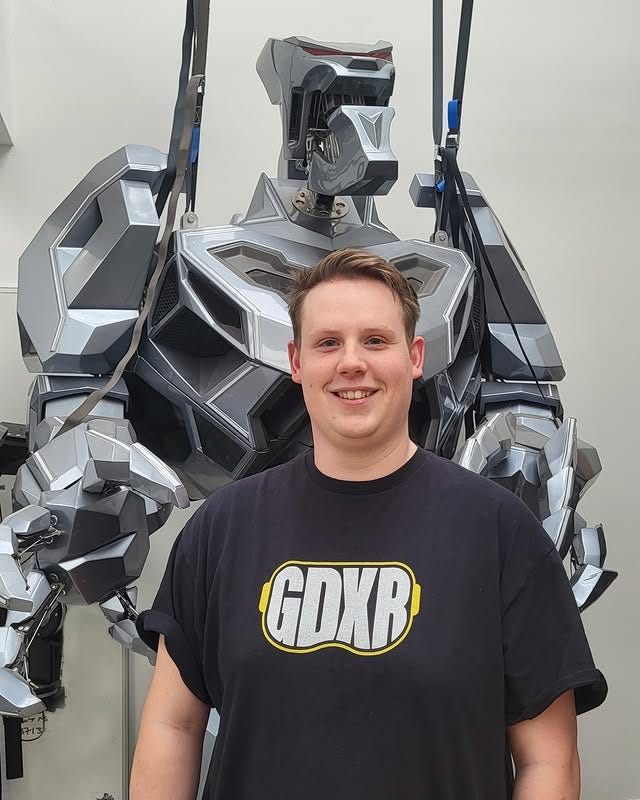
When looking for a developer expert in the XR industry and Unreal Engine, the name GDXR immediately comes to mind. Therefore, it only makes sense to talk with its founder – our spotlight of the week – Jonathan Bardwell.
Plus, we talk about how Meta’s investment in AR/VR is set to surpass $100 billion this year, OpenAI explores AI-powered wearables, and Android XR introduces new camera access for developers.
Now, let’s get into the news 📰
Want access to the parsach platform?
Request an invite on Discord, TikTok, Instagram, or YouTube.
OpenAI Expands Into Everything
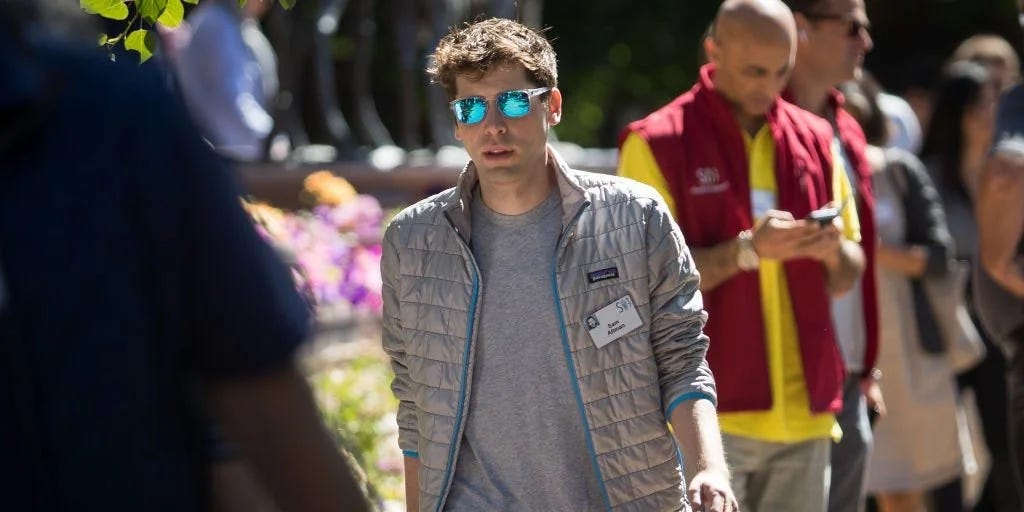
OpenAI is making a move into wearables—AI-powered headsets, watches, and even robots.
OpenAI is reportedly exploring a push into the wearable tech space, hinting at future AI-driven devices such as headsets, smartwatches, and even robotics. This shift suggests a growing focus on AI-powered hardware designed to integrate seamlessly into daily life, potentially competing with existing tech giants in the smart wearable and XR markets. Read more here.
Meta’s Investment in VR and AR Set to Surpass $100 Billion
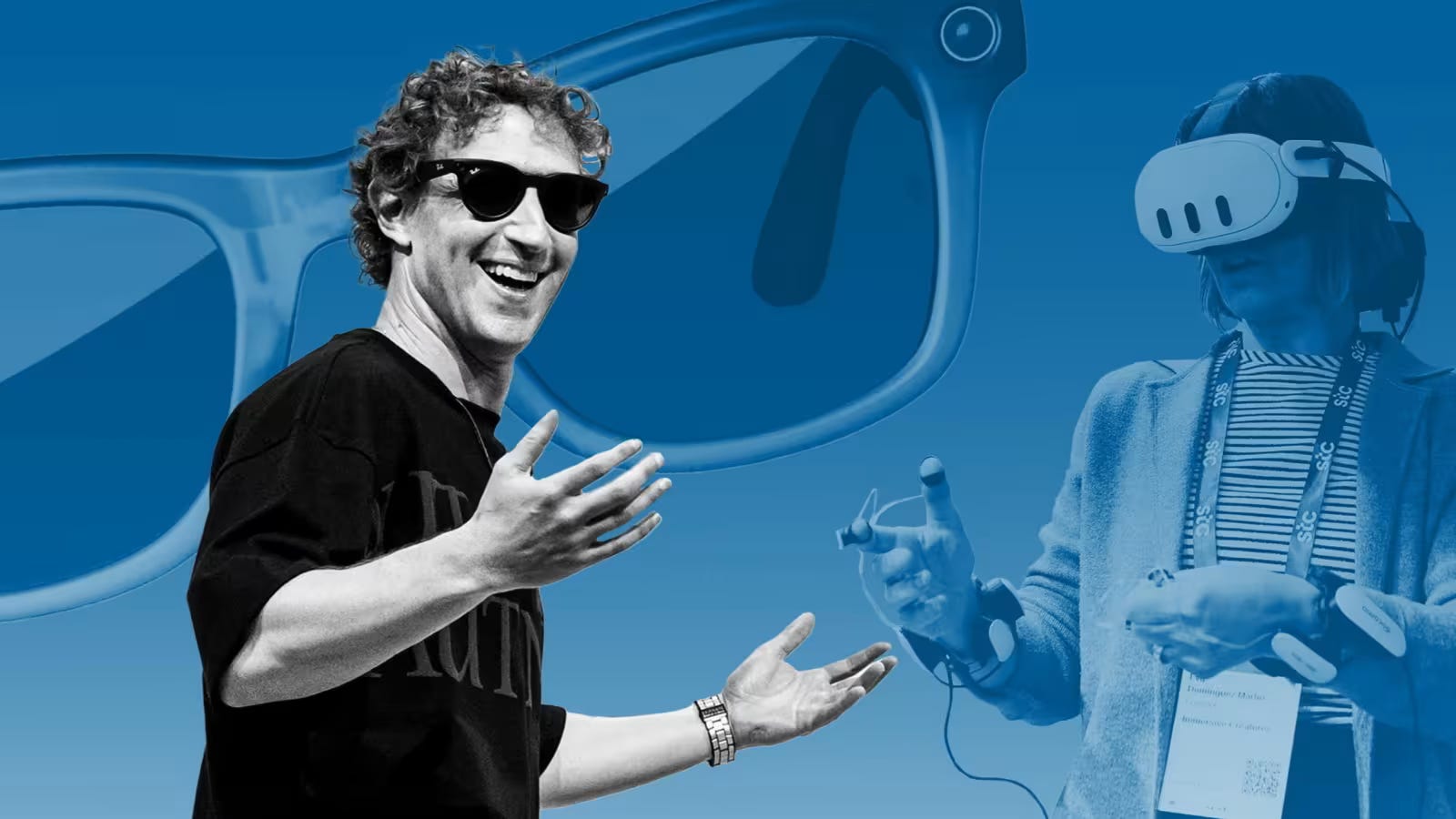
Meta’s cumulative investment in virtual and augmented reality is projected to exceed $100 billion by the end of 2025.
Since acquiring Oculus VR in 2014, Meta has invested over $80 billion in VR and AR technologies. In 2024 alone, the company invested a record $19.9 billion in its Reality Labs division, and despite a $17.7 billion operating loss in 2024, CEO Mark Zuckerberg emphasizes the importance of advancing smart glasses technology, envisioning it as a future computing platform that could potentially replace smartphones. Read more here.
Android XR to Allow Camera Access Similar to Smartphones
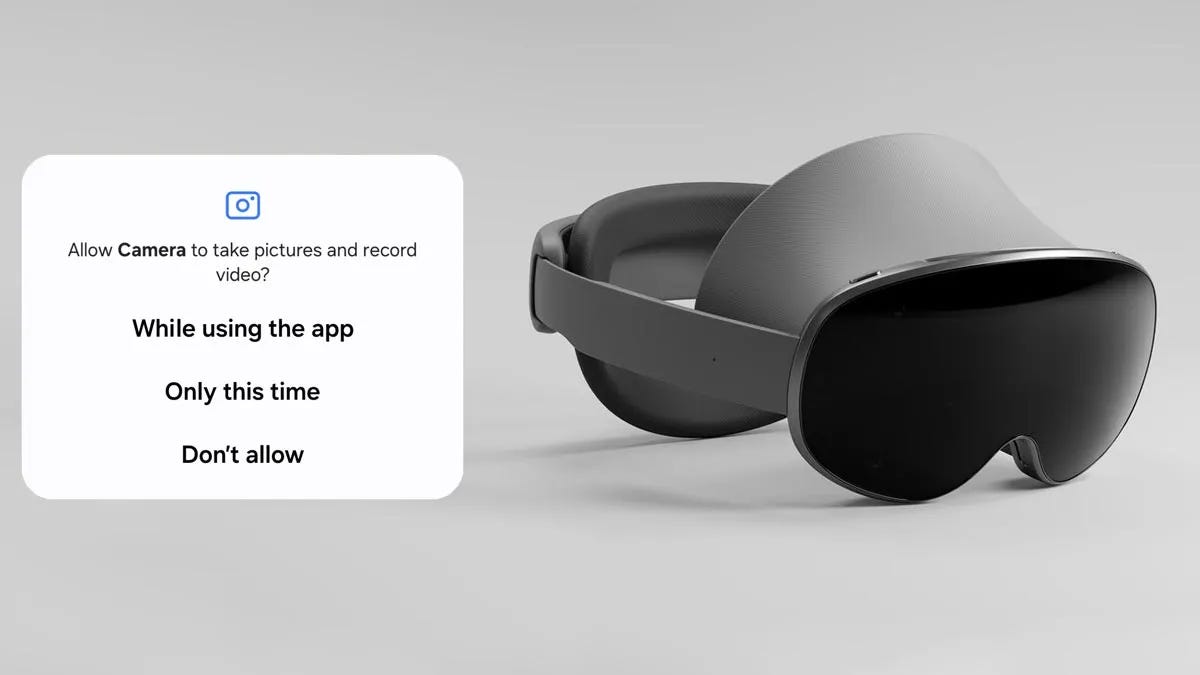
Android XR’s new camera access feature promises to enhance mixed reality experiences, balancing innovation with user privacy.
Google has announced that its upcoming Android XR platform will provide camera access to developers in a manner similar to current smartphones. This move aims to empower developers to create more immersive and context-aware mixed reality applications by utilizing camera data, while also implementing measures to address privacy concerns. Read more here.

Jonathan Bardwell has made significant contributions to the industry through his work in Unreal Engine, and his YouTube channel – aimed at aspiring XR developers. That’s why we wanted to learn about his background, the passion for spatial content, and his projects.
Let’s meet him!
Currently, GDXR is already a household name in the XR space, but can you start by telling us a bit about yourself and what inspired you to start the company in this space?
As a kid, I loved creating things and solving complex puzzles. Being dyslexic made subjects like math and reading more challenging, but art and problem-solving were areas where I thrived. After school, my brother and I played a lot of multiplayer games like Halo and Gears of War, but I found myself more fascinated by level design than the gameplay itself. That curiosity led me to study Game Art at Plymouth College of Art. In my third year, I landed a summer internship at Truevision, a startup using Unreal Engine to create VR arch-viz content. Unfortunately, they shut down soon after, but they introduced me to another startup, One Polygon, doing similar work. After graduating, I joined them—and that’s where I truly fell in love with XR development. I spent the next year with an HTC Vive on my head, building arch-viz and e-learning applications.
Since the company was relatively small, I took on both art and coding, using Unreal Engine’s Blueprint scripting language. When One Polygon had the opportunity to sell, they invited me to join, but I chose to go freelance instead—something my boss, Victor Brelsford, fully encouraged. That was the beginning of Game Dev XR, later rebranded to GDXR, as I found educational XR content far more rewarding to create than standalone games. That's the direction I ended up going in which I now do full time.
With Unreal Engine as a big part of what you do, which features of the engine are you most excited about when it comes to creating amazing immersive experiences?
In my opinion Unreal Engine already provides a fantastic range of XR features, including deferred rendering support on mobile and the recent ability to use Nanite and Lumen in Single-Pass Stereo rendering, which greatly enhances VR visuals. However, what I’m most excited for—though it may be a long way off—is full Nanite and Lumen support for native mobile VR.
While current mobile GPUs aren’t quite ready for it, as hardware improves, this could be a game-changer for standalone VR experiences. Especially as a developer being able to create higher quality game worlds without worrying about baked lighting and other time consuming optimizations that slow down development.
Your YouTube channel is a fantastic resource for beginners or experienced developers and we highly recommend it. That said, what key skills do you think are a must-have for anyone wanting to dive into XR development today?
The most important skill for getting into XR development isn’t knowing everything about the engine—it’s problem-solving. I often joke with my wife that I feel more like a professional Googler than a game developer, but in the end, the ability to research and troubleshoot is what really matters. For example, I recently faced an issue where I couldn’t find a direct solution within Unreal Engine. Instead of hitting a dead end, I looked into Unity and Godot forums and found similar discussions. Once I understood the underlying theory, I was able to adapt the solution for Unreal fairly quickly.
This is something I see a lot with beginners—they think they need to stick strictly to Unreal Engine resources, not realizing that many development principles are universal. I make mistakes all the time on my live streams, and sometimes it takes a fresh set of eyes from the community to point me in the right direction. For those just starting out—don’t be afraid to break things. Trial and error is part of the process, and you can always try again.
What’s one of the most challenging XR projects you’ve tackled, and how did you manage to overcome those challenges or projects?
Unfortunately a large portion of the projects I work on require an NDA so im unable to talk about them directly however its surprising how many projects often have the same issues. Since I work primarily with large companies and educational facilities, there can be a lot of people involved and in most cases they are unaware of what is actually an achievable goal. I quite often end up in meetings with people who have tried VR at home with their kids and thought it could be a great tool for the company (In almost every case it is). But it means that they have different expectations since they don't fully understand the hardware limitations of what's possible.
This is often an issue when the client wants their project to have the best graphics, like Half Life Alyx while using CAD files that are in the millions of polygon counts that have hundreds of textures. But the goal is to make it standalone. This often means I need to explain the situation, what's possible and what isn't and work with them to find a middle ground. This could mean doing desktop only VR or we reduce the scope to make it work with mobile VR. Typically the clients are happy with this as long as they understand why we need to change things.this means a large factor between the projects I work on is related to optimization.
I often find myself working with extremely large or non optimized content where the brief ends up being to make what should be a desktop VR project run on a mobile VR headset such as the Vive Focus 3, or Meta Quest Headsets.
What do you think will be the key driving force behind the growth of the XR industry: innovative hardware or a thriving ecosystem of developers, apps, and services?
I believe the key driving force behind the XR industry right now are the amazing Indie devs. Companies like Meta And Pimax may be trying to push the hardware forward but the indie devs are the ones doing all the work.
Without the indie devs building the software and applications, we'd have nothing to drive it forward. It's why I enjoy creating Youtube tutorials so I can try and help these devs create their awesome content because without them these devices would be expensive paperweights. Also seeing the creative stuff they come up with is extremely rewarding.
I just wanted to say a big thank you to everyone who is a part of the GDXR community, you’re all awesome, keep creating.
One last thing
In 2025 we’ll continue our mission to team up and showcase the companies and people shaping the XR space. Thus, if know a someone or a company that we should feature in our newsletter, talk to us and let us know who they are.
Until next time, and connect with us in Discord, TikTok, Instagram, YouTube.
🫶